

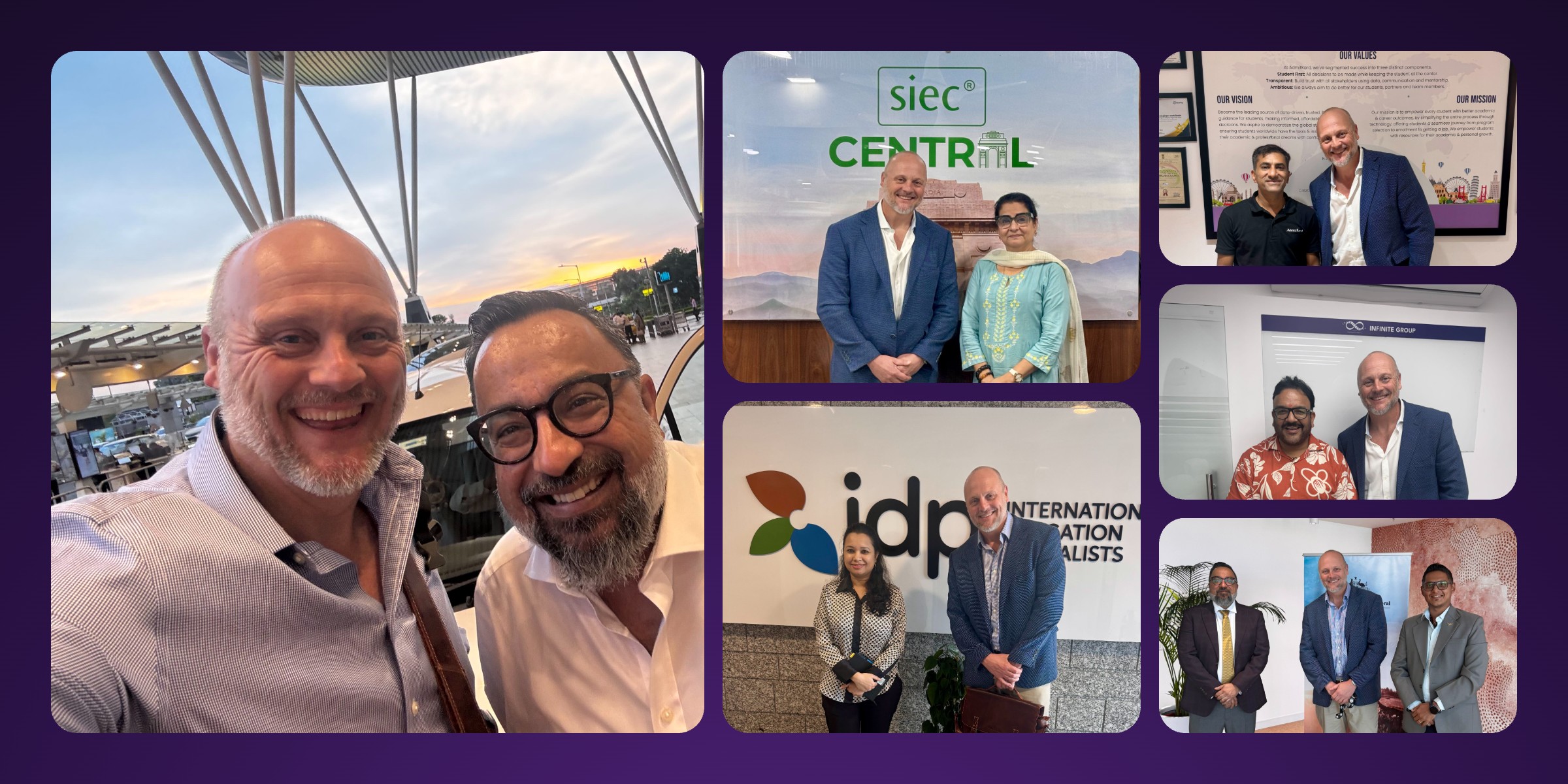
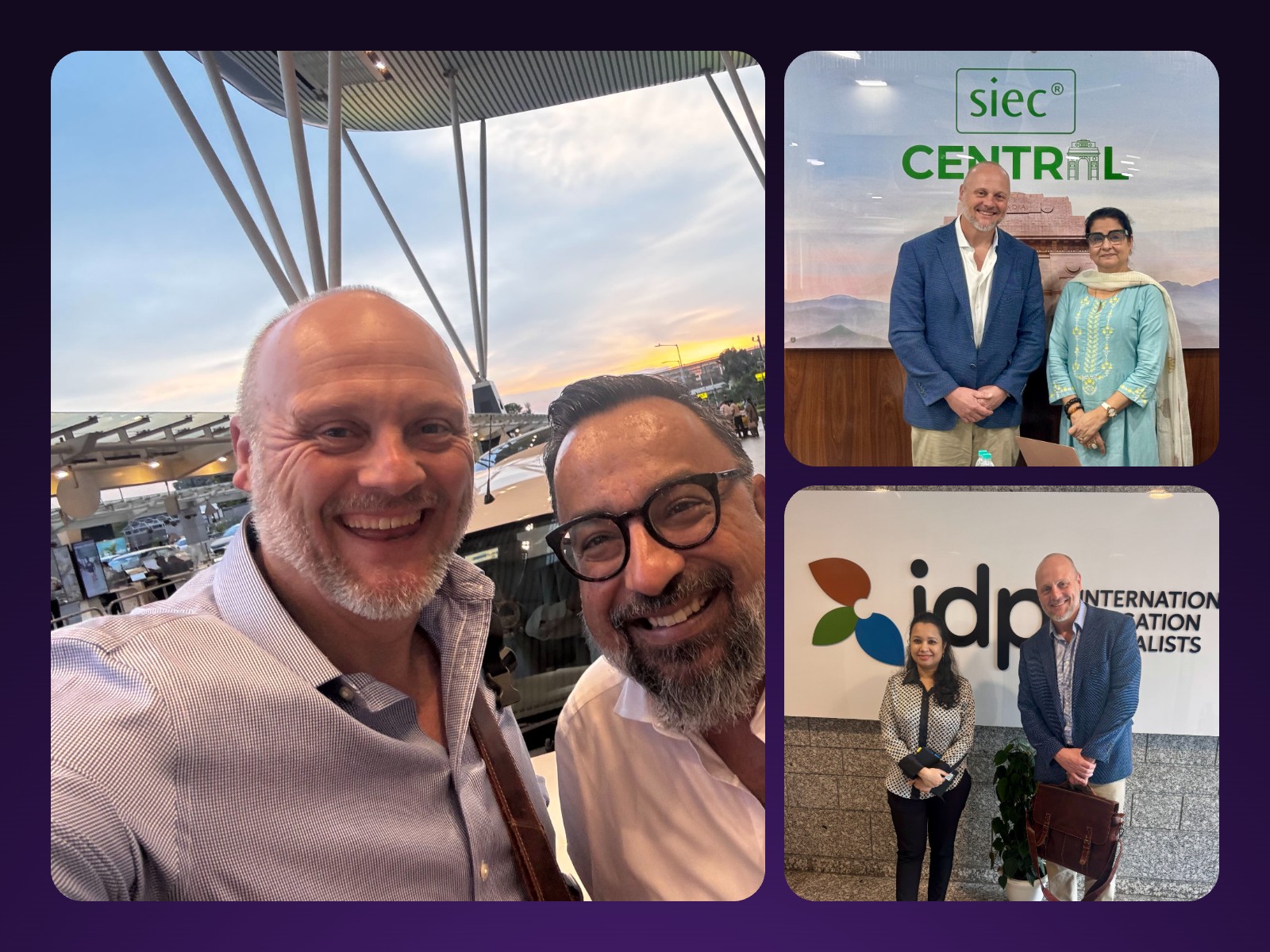
I recently spent two weeks in India speaking with more than 40 education agents, providers, and industry leaders. I heard about what they are seeing in the market, what they are hearing from students and families, and how they are responding to a period of significant change.
While every business and market is different, the consistency of some of those conversations was striking. Demand for international education remains strong, but confidence in some of the traditional destinations has shifted. Visa uncertainty, changing government policy, cost and the broader political conversation are all influencing decisions, while agents themselves are thinking differently about growth, quality, and how they demonstrate their value to institutional partners.
Eight observations came up repeatedly during those conversations and, taken together, give an interesting picture of how one of the world’s most important student recruitment markets is thinking about what comes next.
1. Demand remains, but confidence is influencing where it goes
There was little indication that Indian families have lost their appetite for international education. Students still want to study overseas and families remain prepared to make a significant investment in it. What has changed is the level of confidence around where to make that investment. Certainty, predictability and a sense that students will be welcomed are becoming increasingly important parts of the decision.
2. Australia’s challenge extends beyond visa settings
Visa settings were an obvious concern, but the conversations went beyond approval rates. Agents spoke about a change in how some students and parents perceive Australia, particularly after sustained policy changes and political and media attention around migration. The concern is that destination reputation can take longer to rebuild than policy takes to change.
3. Students are becoming more flexible about the destination
When traditional destinations become harder or less predictable, students don’t necessarily abandon international education. They look elsewhere. Germany came up repeatedly in conversations, while South East Asia and New Zealand was also seen as increasingly attractive, albeit as a smaller market. Agents are responding by broadening the range of destinations they discuss with students and families.
4. Much of the market feels like it is in a holding pattern
One of the clearest impressions was caution. Agents are unsure how settings will evolve, institutions are increasingly conscious of risk, and some families appear willing to wait rather than commit significant money in an uncertain environment. That makes the current slowdown about more than simply underlying student demand.
5. A lack of feedback on visa refusals is making it difficult to adjust
Agents shared numerous examples of students they considered academically and financially strong being refused visas, often without enough feedback to understand why. The frustration wasn’t simply that applications were unsuccessful. It was the difficulty of learning from those decisions and adjusting their counselling and screening accordingly. Several agents said, in effect: give us a clear standard and we’ll work to it.
6. Established agents feel the response isn’t always distinguishing between quality and volume
Many of the longer-established agents I met acknowledged problems that developed during the rapid post-COVID growth period and the need for greater oversight. Their concern is that today’s response doesn’t always distinguish between operators that built businesses around counselling, due diligence, and long-term institutional relationships, and those that were primarily focused on volume. Several felt that quality operators were now carrying some of the consequences of problems they had themselves been warning about.
7. Indian agency leaders are actively engaging in what comes next
Another important observation was that agency leaders aren’t simply waiting for conditions to improve. A number of senior Indian agency and industry representatives are currently in Australia meeting with political leaders, regulators and other stakeholders. The conversations I had suggested they aren’t advocating for a return to unrestricted growth. The focus is on clearer settings, higher standards and a framework that allows quality operators to demonstrate what they do differently and contribute to a more sustainable market.
8. The conversation is shifting from volume towards demonstrable quality
Perhaps the strongest thread running through the trip was a change in what constitutes value. For years, student volume was an obvious measure of an agent relationship. In the current environment, visa outcomes, student quality, due diligence, transparency and risk are becoming much more prominent. The agents I spoke with increasingly recognise that being able to demonstrate the quality of their processes, rather than simply talk about them, may become an important part of how institutions choose their partners in the next phase of the market.