



The 2026 ICEF Agent Voice survey revealed yet again the importance agents place upon service. Some universities make partnership more challenging than it need be, however, including in the agreements and associated documents that underpin these relationships.
Around 11% of contracts held in HE Comply run in perpetuity, having no fixed end date. Of the remainder that do expire and require renewal, 17.8% - close to 1 in 5 - do so on a single calendar date: 31 December.
For Australia’s public universities, this rises to 33% of all agent contracts with a stated end date on perhaps the least customer-friendly day (or even season) of the year. Over 65% of Australian universities’ agent contracts expire on just 5 calendar dates. This would be 1.4% of contracts if end dates were spread evenly across the year; that’s impractical of course, but is anyone assessing the impact of these admin peaks on agents?
Why the bunching, and who does this benefit most?
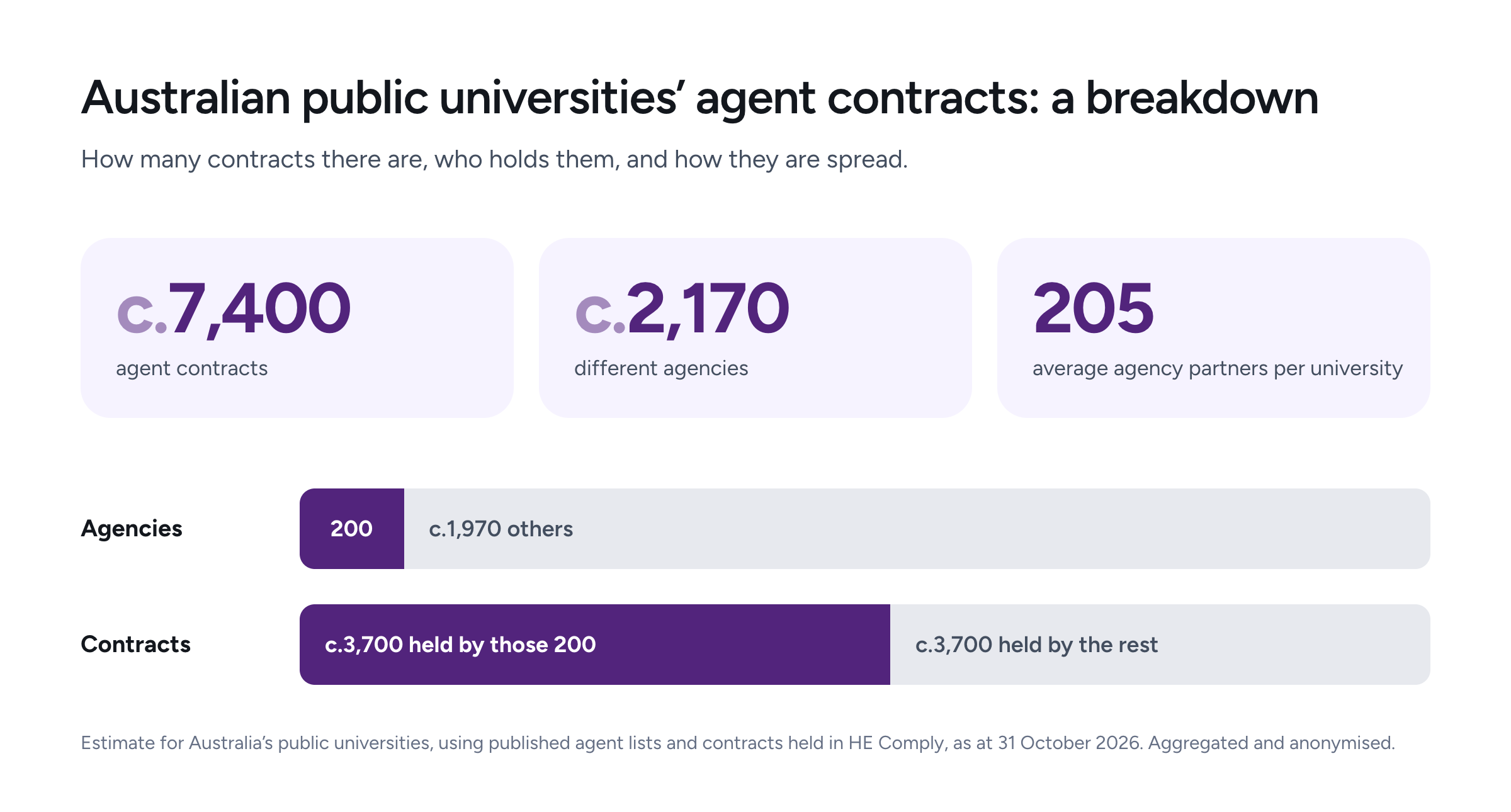
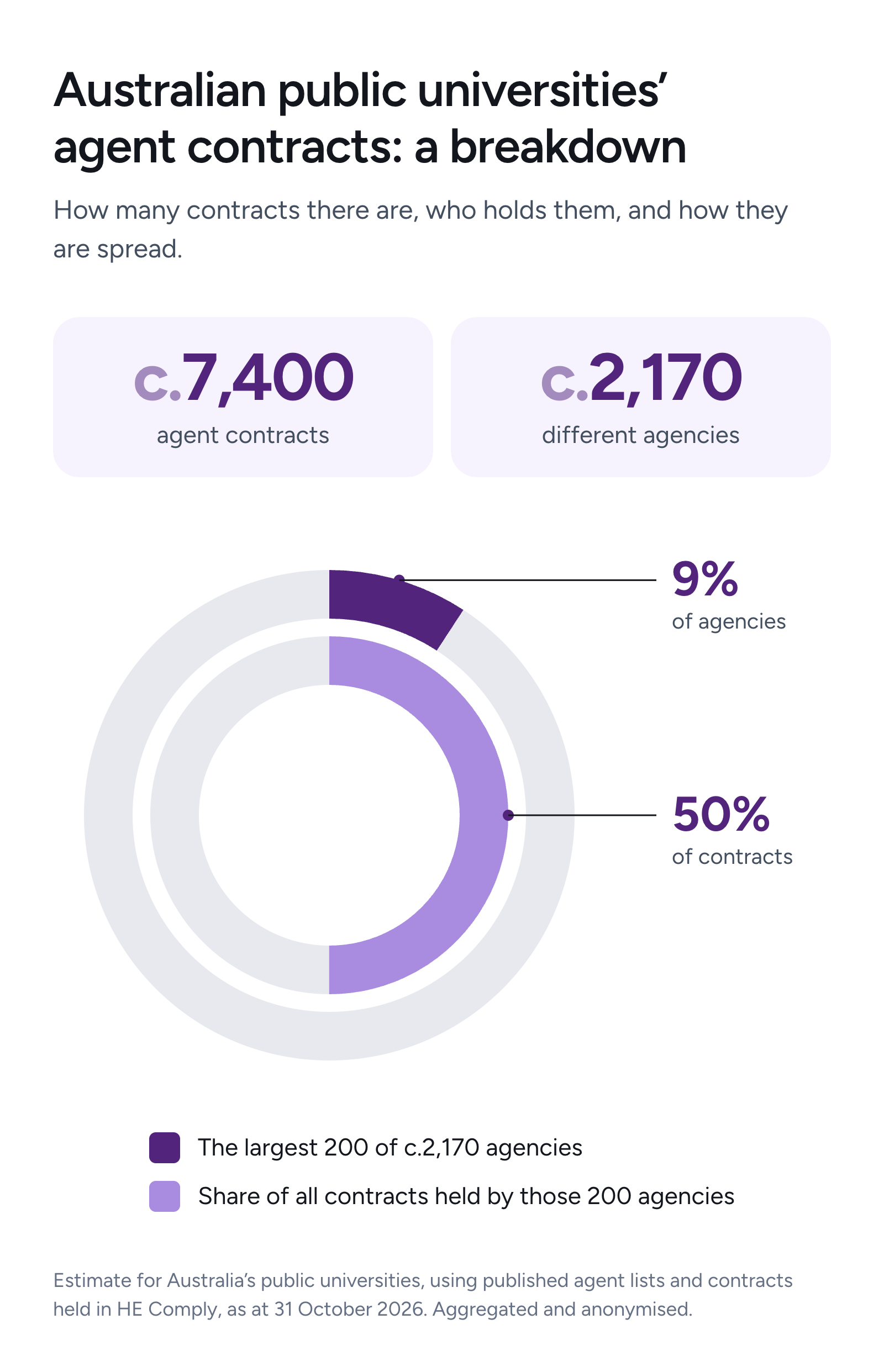
Australia’s public universities hold around 7,400 contracts. These are held with approx. 2,170 unique agencies. Just 200 of these agencies hold half the total contracts.
Each university averages slightly over 200 partners, albeit with some outliers like CQUni and Deakin lifting this.
With an average contract duration of 33 months, and excluding perpetual agreements, around 2,390 of those 7,400 agreements must be renewed every calendar year.
This means that about 800 will expire on 31 December 2026.
There may be good reasons for this, though it is likely legacy legal drafting that stuck. University and agency staff think in terms of intake dates and semesters, and are likely on extended leave around this final day of the academic calendar. Many Australian universities are in quiet stasis from mid December to Australia Day (it’s a glorious time to be on campus).
Those agencies whose agreements are up for renewal this New Year’s Eve may be judged most materially on July entry performance, months post-census date. At a time when many universities are openly culling partners, it may be a sub-optimal renewal date for some agents.
So renewals pile up in December and January, when teams are often smallest and when chaser emails go unheeded. And when one is missed, both sides may keep recruiting without a current agreement, and later commission claims lodged for that period may not be paid (though this seems less common with public universities than with private providers, where even court cases can occur over unpaid commissions).
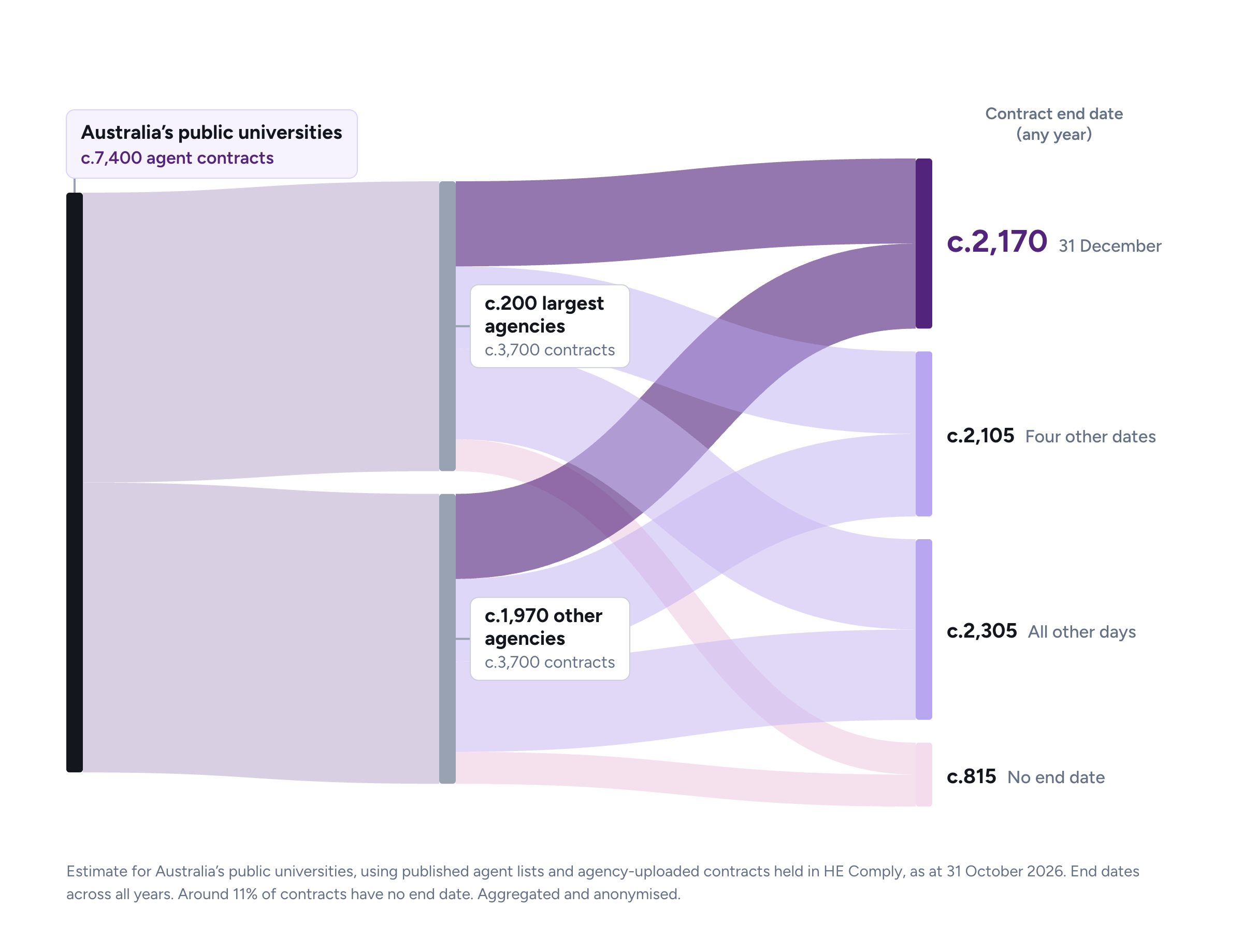
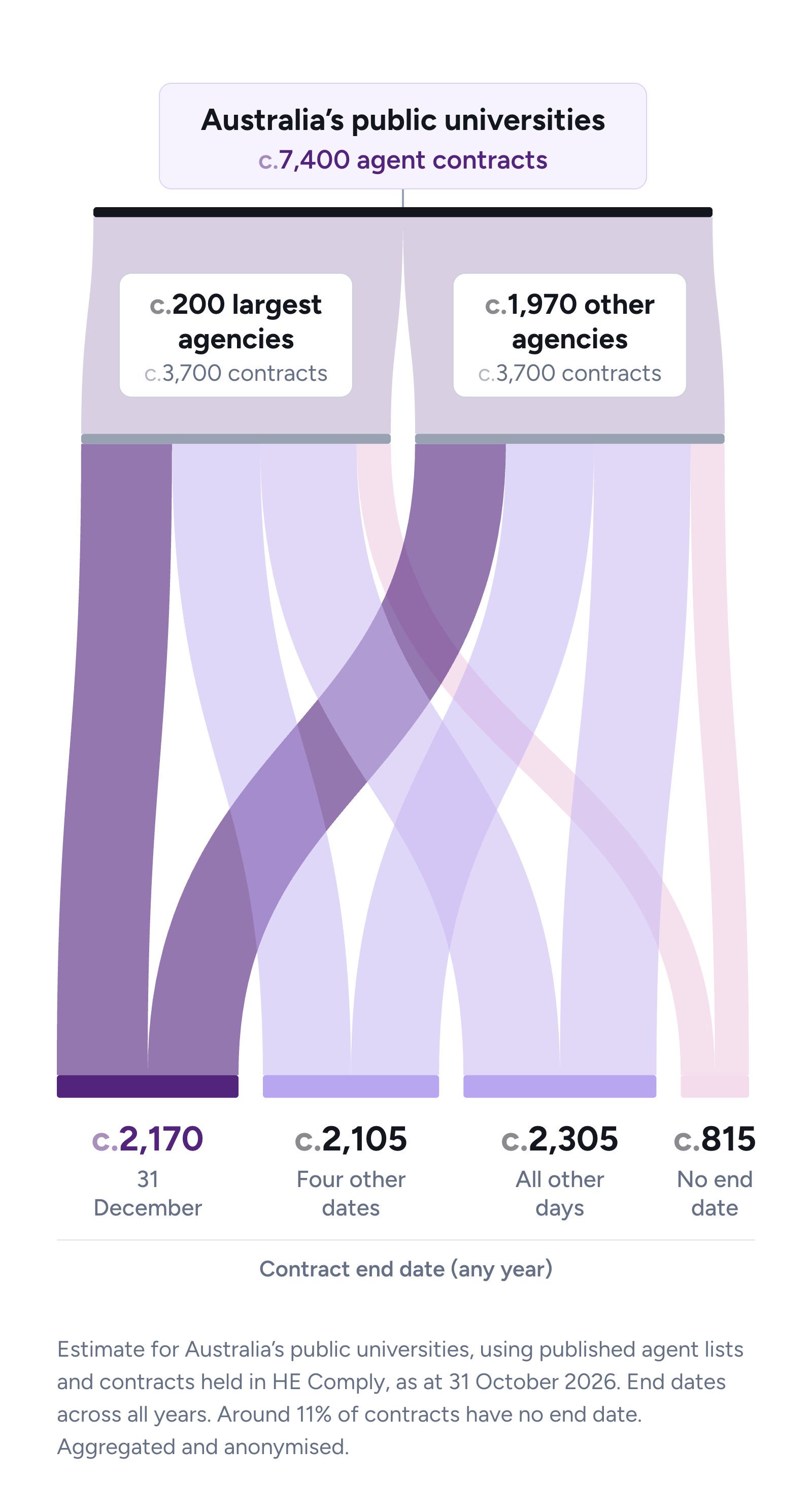
The use of December 31 as an expiry date seems not to benefit either side of the relationship materially. Perhaps there is a better alternative, and maybe agents should be asked what this could be.
The consulting gap
When I led international recruitment at the Australian National University, a big four consulting firm quoted $745,000 to advise on how we managed our agents. The scope covered scholarships, incentives, and admissions perceptions.
It did not propose looking at the process our agents went through to negotiate, sign, renew, and maintain agreements with us. What in other verticals might be called customer experience (CX).
Most advice on agent management looks inward, at what the institution needs from its agents. ‘Oversight’ and ‘management’ of agents is often discussed, despite there being two broad problems with this: 1) university staff know very well how to manage and oversee these relationships, and 2) this frames agents as staff to be managed instead of partners to be engaged.
Agents are an institution’s proxy customers in this relationship, in lieu of the students they acquire. The contracting and renewal process happens transactionally to every agency, rather than with the agent’s experience in mind. A good example of this is seen with Agent Quality Framework documentation challenges experienced by agencies working with UK institutions (“We need another staff member just to handle the paperwork,” said one agent).
Few institutions view the broader administrative process from the agency’s side; we asked one world top 100 university’s team what level of importance they place upon agency UX and the immediate answer back was “zero”. Some partnership.
Some of the changes needed to bring improvement to partner agents’ experiences are small. Consider their admin peaks and cyclical staffing gaps. Cut emails. Ask them to co-design processes. Start renewals months before they are due and do so digitally and in a way that helps agent partners do it easily and quickly.
When do your terms expire, and is process design something your institution is doing with agents? Let us know.
About this data
Figures are drawn from contracts held in HE Comply as at 31 October 2026, with an end date, by day of the year across all years. All figures are aggregated and anonymised. No individual institution or agency can be identified. Includes published agent data from Australian university websites.